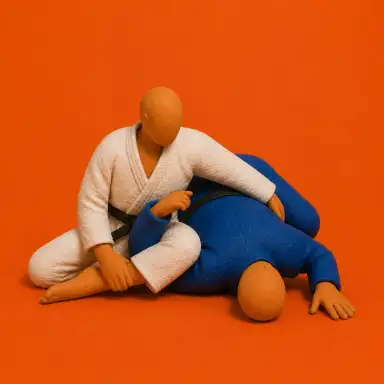
Omoplata
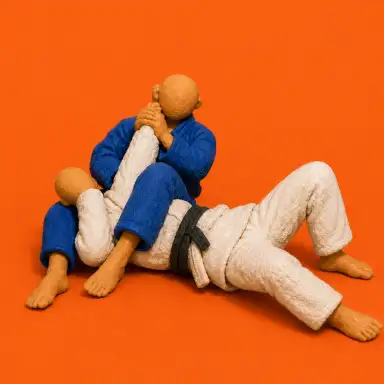
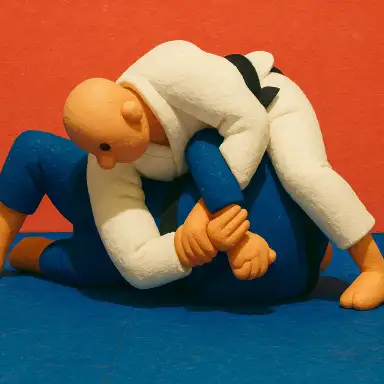
A shoulder lock that uses the legs to apply pressure to the opponent's shoulder joint. The technique involves trapping the opponent's arm between your legs and rotating their shoulder.
How to do the Omoplata
When to use it
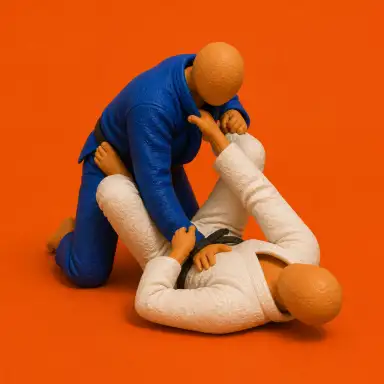
The omoplata is a bottom-player attack from closed guard, lasso guard, rubber guard or collar and sleeve guard, and a common follow-up when the opponent pulls an arm out of a triangle choke or armbar. It works best when one arm is pinned or held across your body.
Step by step
- Control the opponent's wrist or sleeve, open your guard and hip escape toward the attacking side.
- Swing that leg over their back, shin across their shoulder, trapping the arm between your legs.
- Turn to face their feet, sit up and wrap your arm over their far hip or belt so they cannot roll forward.
- Scoot your hips away from their head to flatten them, keeping your knee pinching their shoulder.
- Keep their hand pinned to your hip and lean forward toward their head until the shoulder rotates. Move slowly so your partner can tap early.
Key details
- Sitting up and holding the far hip stops the forward roll escape.
- Your hips, not your hands, turn the shoulder. Keep their wrist trapped against your body.
- Get perpendicular before you sit up. Staying parallel lets them posture and pull the arm out.
Common mistakes
- Staying flat after the leg comes over. They posture or roll; sit up at once and grab the hip.
- Leaving their elbow loose between your legs. The arm slides out; pinch your knee and keep the shin deep.
- Forcing the shoulder with your arms. Sweep from the position, or switch to the triangle choke or baratoplata.
How to escape it
- As the leg comes over your shoulder, posture up and pull your elbow back before the attacker sits up.
- If the legs lock, tuck your head and roll forward over the trapped shoulder to take tension off the arm.
- Come out facing them and pull the arm free while their legs are loose.
- Keep your head and arms inside as you recover so you do not walk into a triangle choke.
Gi vs no-gi
In the gi, sleeve and lapel grips make the arm easier to hold during the entry. In no-gi the arm slips out more easily, so the far hip and a tight knee matter more.
FAQ
- Can you finish an omoplata in no-gi?
- Yes. Without sleeve grips you rely more on your legs and hip control, but the shoulder lock is the same.
- What do you do if the opponent rolls out of the omoplata?
- Many coaches teach following the roll to come up on top, or switching to a triangle choke while the arm is still trapped. The follow-up varies by school.
Where Omoplata connects
Comes from
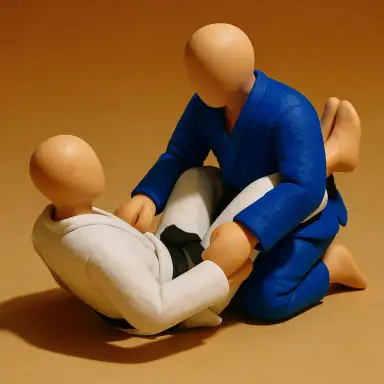
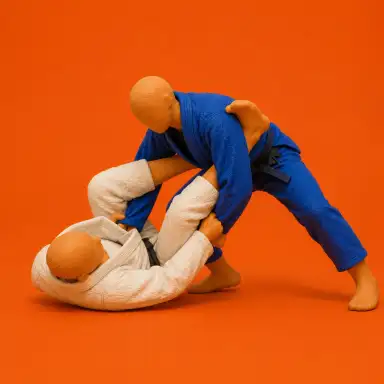
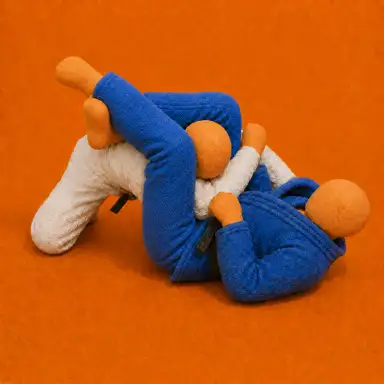
Omoplata
Leads to
Champions who use it
- 1Watch on YouTubeMason FowlerUnited States · 10 match clips
- 2Watch on YouTubeAlexandre RibeiroBrazil · 5 match clips
- 3Watch on YouTubeClaudia Do ValBrazil · 5 match clips
- 4Watch on YouTubeGiancarlo BodoniUnited States · 4 match clips
- 5Watch on YouTubeBuchecha (Marcus Almeida)Brazil · 3 match clips
18 more champions
Filter by weight class and event, and watch every match clip, in the app.
Technique videos


How to escape it


Sequences with this technique
9 sequences
Every step from entry to finish lives in the app's tech tree.
Related techniques

Log this technique in your training journal
Post Black Belt: BJJ Journal
Log BJJ training, track belt & stripes, get AI technique picks and Health sync.