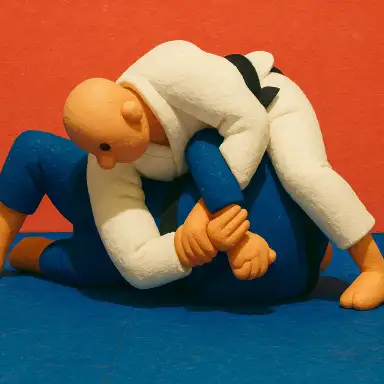
Kimura
A shoulder lock that rotates the opponent's shoulder internally. The technique involves a figure-four grip to control the wrist while applying rotational pressure to the shoulder joint.
How to do the Kimura
When to use it
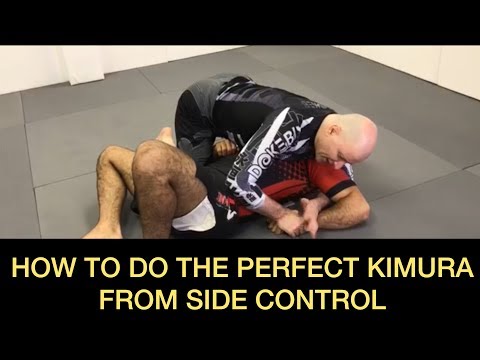
The kimura appears whenever the opponent's arm is bent and away from their body: a hand posted in closed guard, an arm framing in side control or north south, or a loose elbow in half guard and Z guard. Even when the finish fails, the grip opens the back take, kimura sweep and armbar.
Step by step
- Grip the opponent's wrist with the hand on the same side as their arm.
- Reach your other arm over their shoulder, under their triceps, and grab your own wrist.
- Pull their elbow tight to your chest, bent at roughly a right angle.
- Take an angle: from guard, hip escape toward the trapped arm and throw your leg over their back; from top, step over their head or pin their elbow under your chest.
- Drive their hand up along their back toward their head, turning the shoulder slowly so your partner can tap early.
Key details
- Keep their elbow glued to your chest. Any space lets the arm straighten and the lock disappears.
- Keep the right angle at their elbow; turning the wrist without it bends the elbow instead of rotating the shoulder.
- Stop their posture or roll first: your leg over their back in guard, your weight pinning the shoulder on top.
Common mistakes
- Cranking with your arms while flat on your back. Hip out first so your whole body turns the shoulder.
- Stalling when they grab their belt, leg or hand. Switch to the back take or kimura sweep instead of forcing it.
- Lifting the wrist straight off the mat. Their hand travels up along their back toward their head.
How to escape it
- Keep your elbows close to your ribs and avoid posting a straight arm beside the attacker.
- When the figure-four lands, connect your trapped hand to your body, belt or thigh.
- Straighten the arm or drive the elbow toward the attacker to break the right angle.
- From top, posture up and step around before their leg comes over your back.
Gi vs no-gi
In the gi the defender can hold their belt or lapel, so the attacker often breaks that grip or switches attacks. In no-gi the wrist slips more.
FAQ
- What is the difference between a kimura and an americana?
- Both use a figure-four on a bent arm but rotate the shoulder in opposite directions: the kimura turns the hand behind the back, the americana turns it toward the head.
- Is the kimura dangerous in training?
- A fast rotation can injure the shoulder before pain arrives. Apply it slowly, and tap as soon as your shoulder starts turning with no escape.
Where Kimura connects
Comes from

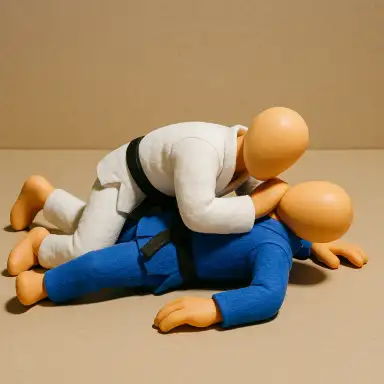
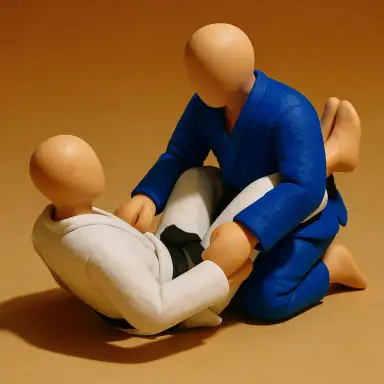
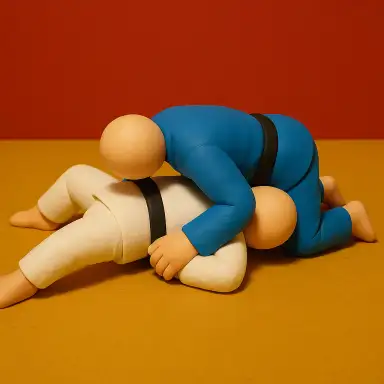
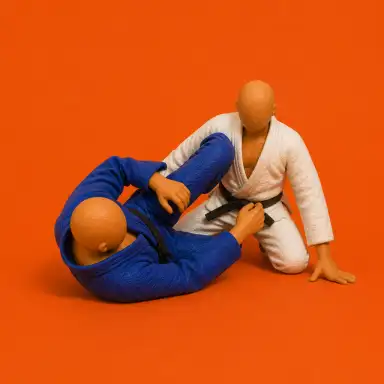
Kimura
Leads to
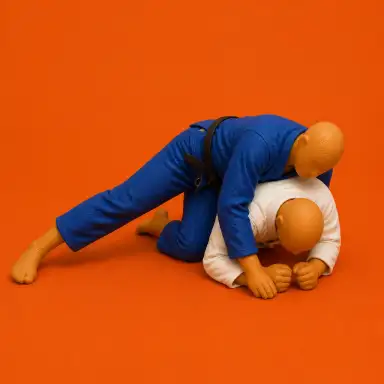
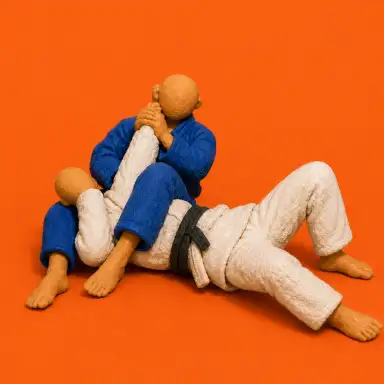
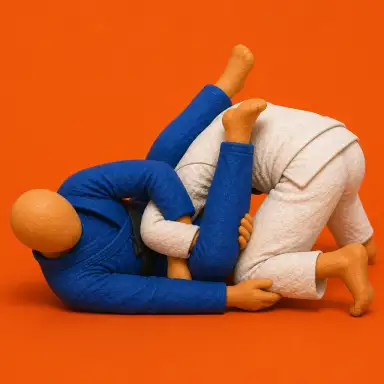
Champions who use it
- 1Watch on YouTubeAlexandre RibeiroBrazil · 5 match clips
- 2Watch on YouTubeClaudia Do ValBrazil · 5 match clips
- 3Watch on YouTubeMason FowlerUnited States · 4 match clips
- 4Watch on YouTubeCobrinha (Rubens Charles)Brazil · 3 match clips
- 5Watch on YouTubeBuchecha (Marcus Almeida)Brazil · 2 match clips
7 more champions
Filter by weight class and event, and watch every match clip, in the app.
Technique videos


How to escape it


Sequences with this technique
10 sequences
Every step from entry to finish lives in the app's tech tree.
Related techniques

Log this technique in your training journal
Post Black Belt: BJJ Journal
Log BJJ training, track belt & stripes, get AI technique picks and Health sync.